

Introduction
Kallar Kahar is a town in the Chakwal District of Punjab. It is a special place. People call it the “Gateway to the Soan Valley” or the “Crown of the Salt Range”. This town is very different from the rest of Punjab. You will see hills and a beautiful saltwater lake. You will also see Mughal buildings and a lot of geological history. If you like nature, history and culture you will love Kallar Kahar.
Chakwal City: The Military Valley of Pakistan – History, Rewari, Khussa Shoes & Tourist Places
🧭 1. Location & Access: How to Get There
Exact Location: Kallar Kahar, Tehsil Kallar Kahar, Chakwal District, Punjab, Pakistan.
Distances:
- From Islamabad: ~125 km (approx. 1.5–2 hours via M-2 Motorway)
- From Lahore: ~240 km (approx. 2.5–3 hours via M-2 Motorway)
- From Chakwal city: ~25 km (approx. 30 minutes)
Access by Road:
- M-2 Motorway (Lahore-Islamabad Motorway): Take the Kallar Kahar Interchange (Exit 306) . The interchange leads directly into the town.
- Important for Drivers: The motorway section approaching Kallar Kahar from both sides includes steep gradients and sharp curves as it cuts through the Salt Range. Heavy vehicles often slow down here, so drive cautiously, especially in foggy winter months.
Public Transport: Buses and vans from Lahore, Rawalpindi, and Chakwal regularly serve Kallar Kahar. However, having a private car is recommended for exploring nearby attractions like Swaik Lake and Molat Fort.
🏛️ 2. Historical Timeline: From Empires to Independence
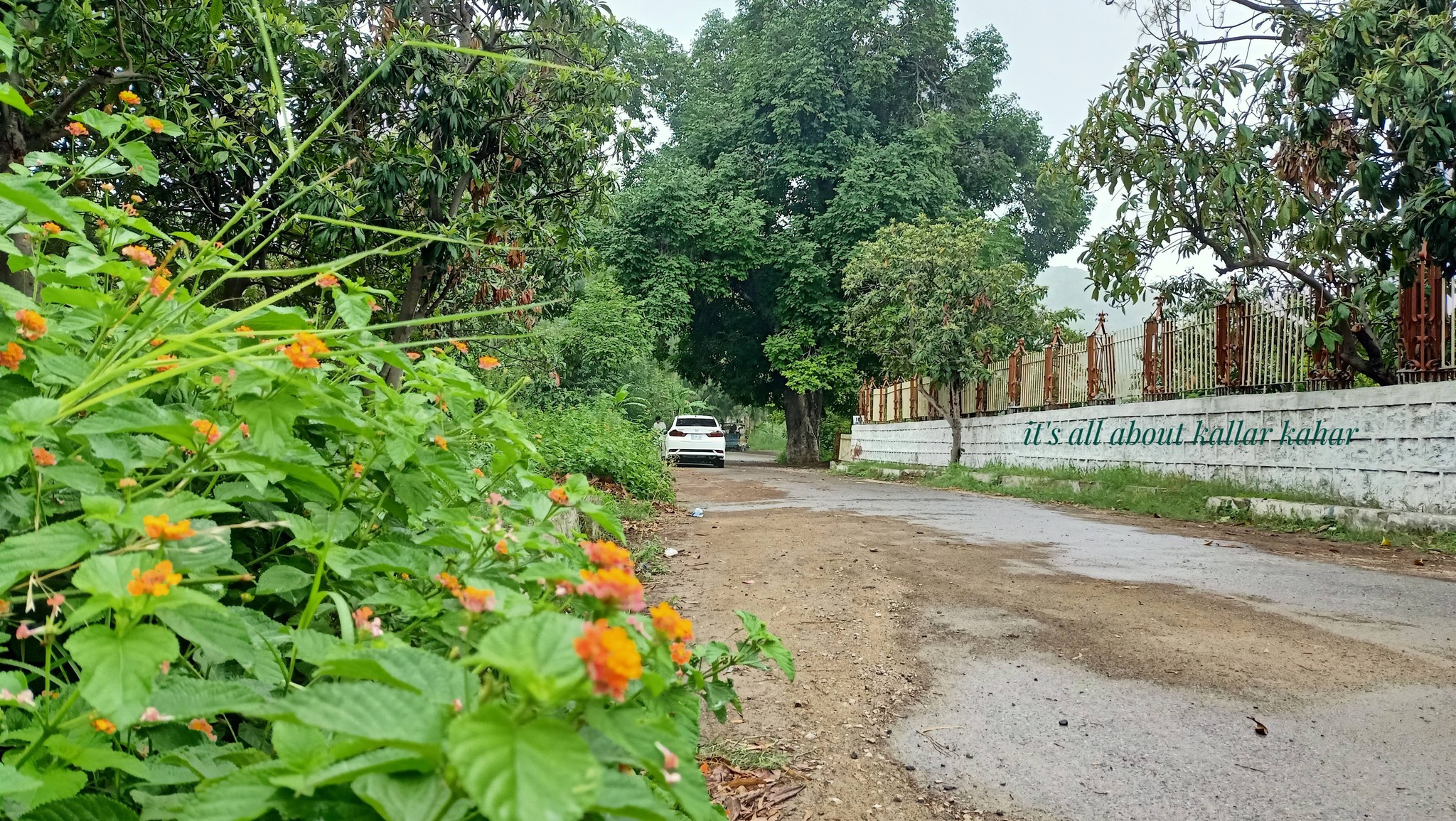
Kallar Kahar has a long history. The area around it has been home to humans for thousands of years. You can even find dinosaur fossils there. The town became famous during the Mughal era. Emperor Zahir-ud-din Babur came to the valley in 1519 AD. He liked it much that he wrote about it in his book, the Baburnama. He called it a “child of Kashmir”. Babur ordered his army to make a stone platform on a hill. This platform is called Takht-e-Babri. It is where Babur talked to his soldiers before going to Delhi. Next to the platform he made a garden called Bagh-e-Safa. It was the Mughal garden in the subcontinent.
Kallar Kahar also has a lot of Sikh history. There are some old temples near the town. The Katas Raj Temples are one of the sacred Hindu sites in Punjab. People say that Lord Shiva cried much when his wife died that his tears made a sacred pond.
Ancient Period (Prehistoric to 1000 CE)
- The broader Potohar Plateau and Soan Valley contain some of the earliest evidence of human settlements in South Asia (dated to over 500,000 years ago).
- Fossilized remains of dinosaurs and prehistoric mammals have been discovered in the Salt Range.
Mughal Period (16th Century)
- 1519 AD: Emperor Zahir-ud-din Babur, founder of the Mughal Empire, camped here during his march toward Delhi.
- Baburnama (Memoirs): Babur was so captivated by the valley’s cool breezes and tranquil lake that he described it as a “child of Kashmir.”
- Takht-e-Babri (Babur’s Throne): A stone platform carved from limestone where Babur addressed his troops.
- Bagh-e-Safa: Believed to be the first Mughal garden in South Asia. Today, it is mostly in ruins, with few original structures remaining, but the site still holds historical significance.
Sikh & Hindu Heritage (18th–19th Century)
- The nearby Katas Raj Temples (approx. 20 km) date back to the Mahabharata era but were renovated during Sikh rule. Legend holds that Lord Shiva’s tears formed the sacred pond.
- Hindu and Sikh communities once thrived in the region, leaving behind temples and stepwells.
British Era (19th–20th Century)
- The British recognized the Salt Range’s strategic importance and built roads and military routes through the area.
- The Khewra Salt Mine (world’s second largest) was developed extensively under British administration.
- The M2 Motorway’s current alignment roughly follows older British-era routes through the Salt Range.
Post-Independence (1947–Present)
- After Partition, many Hindu and Sikh residents migrated, leaving behind temples that are now protected heritage sites.
- In recent decades, the Tourism Development Corporation of Punjab (TDCP) has developed Kallar Kahar as a key tourist destination.
🧪 3. Geological Importance: The Science Behind the Beauty
Kallar Kahar’s landscape is a geologist’s dream, offering a window into Earth’s deep past.
Formation of the Salt Range
- 600 million years ago: A prehistoric sea (the Tethys Ocean) covered much of the region. As the sea evaporated, it left behind massive deposits of rock salt, gypsum, and other evaporites.
- Himalayan Uplift: When the Indian tectonic plate collided with the Eurasian plate, the Himalayas rose. The Salt Range was pushed upward and folded into its current east-west alignment.
The Kallar Kahar Fault (KKF)
- A prominent strike-slip fault running northwest-southeast.
- Active tectonics and transpressional forces created the depression that now holds the saltwater lake.
Nearby Geological Treasure: Khewra Salt Mine
- Located approximately 35 km from Kallar Kahar.
- World’s 2nd largest salt mine (after Wieliczka in Poland).
- Produces 95% of Pakistan’s salt.
- Open to tourists with guided tours inside the mine’s illuminated chambers.
Why this matters: Unlike typical travel guides, understanding the geology helps visitors appreciate why the lake is saline, why the hills are layered with red and white rock, and why the area is a UNESCO potential heritage site.
Katas Raj Temples & Kallar Kahar: Travel Guide, History, Myths, Tips (2026)
🌊 4. The Enchanting Saltwater Lake
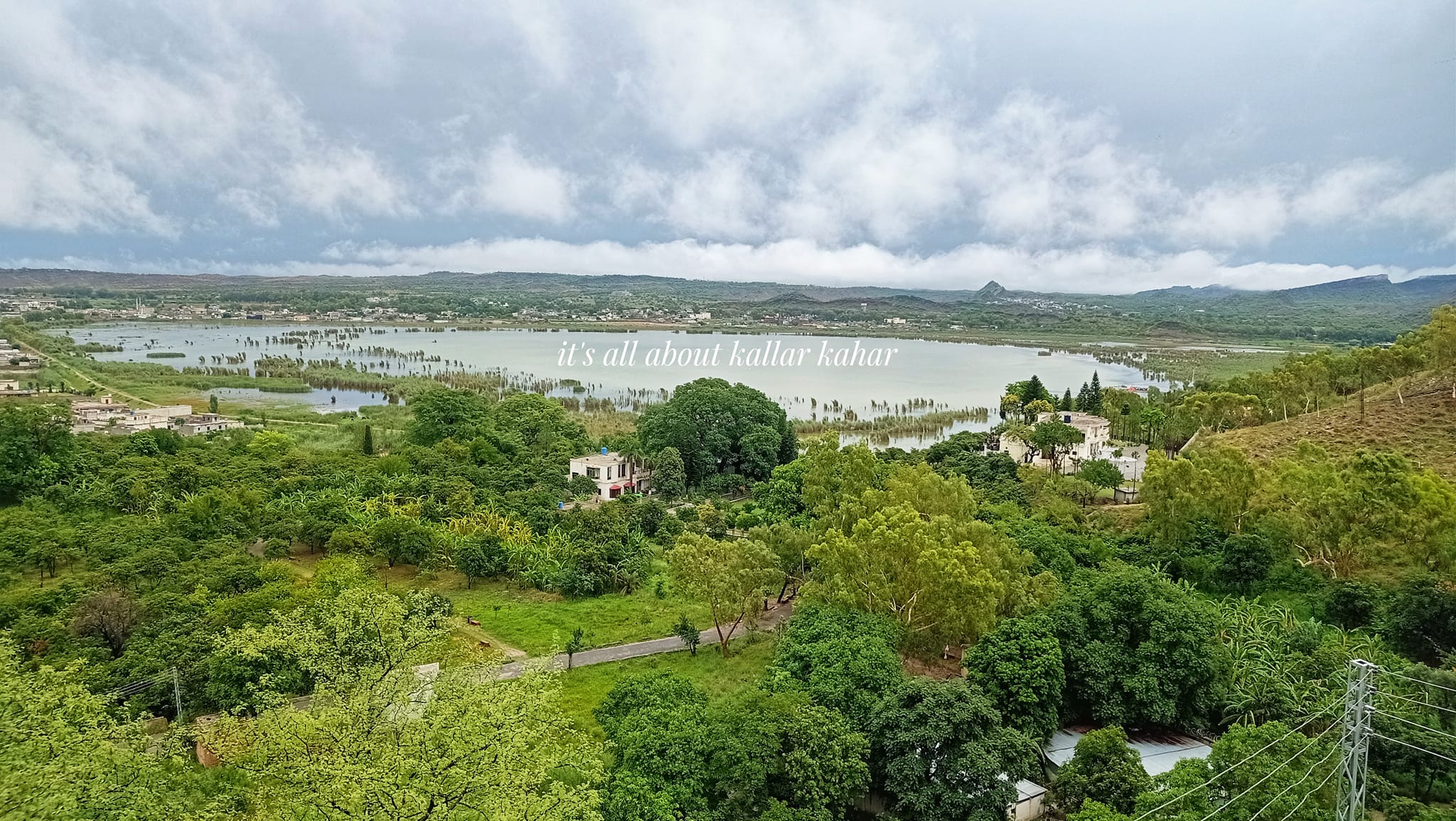
The lake in Kallar Kahar is very beautiful. It is a saltwater lake that’s about 85 hectares big. It is not very deep about 1.5 meters. The lake is salty because of the salt deposits underneath it. It is a Game Reserve and a lot of birds come here in the winter. You can see White-headed Ducks, Imperial Eagles and even Greater Flamingos. The lake is also good for boating and fishing. There is a resort near the lake that has a restaurant and a play area for kids. The view of the lake at sunset is amazing.
At the heart of Kallar Kahar lies its namesake lake—a brackish, saltwater body spanning approximately 85 hectares (8 square km) with an average depth of just 1.5 meters (5 feet) .
Best Viewing Times
- Sunrise (6:00–7:30 AM): The lake mirrors the golden and pink hues of the rising sun. Wild peacocks are most active nearby.
- Sunset (5:00–6:30 PM): The surrounding hills cast dramatic shadows. Ideal for photography.
Activities
- Paddle boating & motor boating (available through TDCP)
- Bird watching (best from November to February)
- Fishing (local permits may be required)
Environmental Challenges
- Water levels: The lake has been shrinking in recent decades due to reduced rainfall and increased groundwater extraction.
- Pollution: Litter from visitors, especially plastic waste, threatens aquatic life.
- Conservation status: Declared a Game Reserve in 2006, but enforcement remains weak.
Bird Species You Might See (Professional Naming)
| Common Name | Scientific Name | Season |
|---|---|---|
| White-headed Duck | Oxyura leucocephala | Winter |
| Greater Flamingo | Phoenicopterus roseus | Winter |
| Imperial Eagle | Aquila heliaca | Winter |
| Sociable Plover | Vanellus gregarius | Winter |
🗺️ 5. Top Attractions Nearby (With Distances & Travel Time)
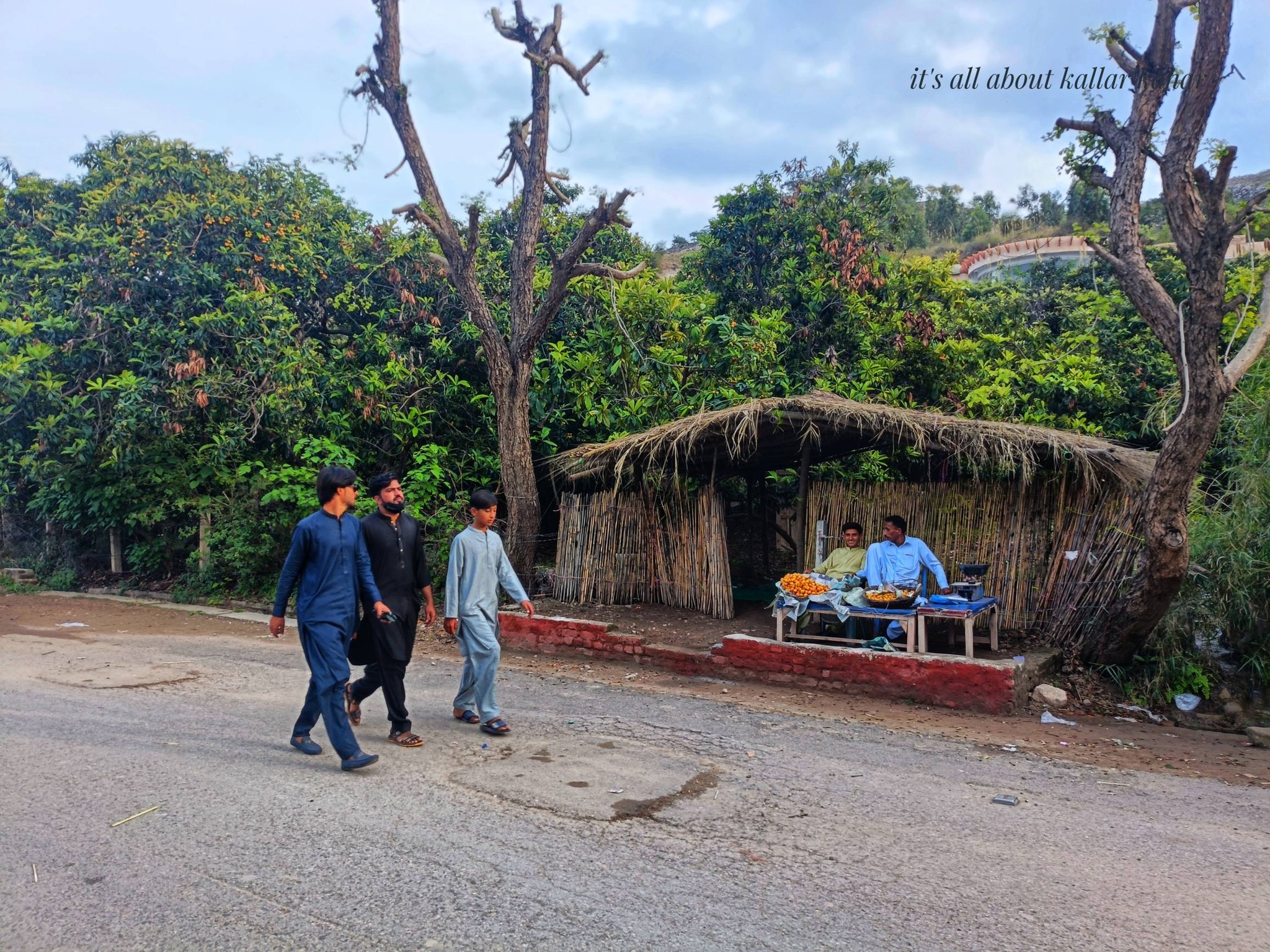
Kallar Kahar has a lot of things to see and do. The Takht-e-Babri is a famous historical landmark. It is where Babur talked to his soldiers. The Bagh-e-Safa is a beautiful garden. The Kallar Kahar Museum is an addition to the town. It has a lot of artifacts and fossils. You can see pottery, animal toys and Buddhist statues. The Molat Fort is a 12th-century fortress that’s about 12 kilometers away. It has two Hindu temples that’re very beautiful. The Swaik Lake is an oasis that is about 10 kilometers away. You can swim cliff jump. Just enjoy the waterfall.
| Attraction | Distance from Kallar Kahar | Travel Time | Highlights |
|---|---|---|---|
| Takht-e-Babri | 1 km (within town) | 5 min | Mughal stone throne, panoramic valley view |
| Katas Raj Temples | 20 km | 30 min | Ancient Hindu temple complex, sacred pond |
| Molat Fort | 12 km | 20 min | Red sandstone fort with Hindu temples |
| Swaik Lake (Neela Paani) | 10 km | 20 min | Crystal-clear water, cliff jumping, waterfall |
| Khewra Salt Mine | 35 km | 45 min | World’s 2nd largest salt mine, tourist train |
| Kallar Kahar Museum | 2 km | 5 min | Fossils, Gandhara art, Mughal artifacts |
Tip: A full day can cover the lake, Takht-e-Babri, Swaik Lake, and Molat Fort. Add Katas Raj and Khewra for a two-day trip.
🦚 6. Wildlife Section: Peacocks, Urial & Chinkara
One of the things about Kallar Kahar is the peacocks. They are very beautiful. You can see them near the shrine of Sakhi Sultan Bahoo. They spread their feathers. Dance in the morning. The area is also home to the Punjab Urial and the Chinkara gazelle.
Kallar Kahar’s hills and forests are home to remarkable wildlife, best viewed at dawn.
Indian Peafowl (Pavo cristatus)
- Locally abundant near the shrine of Sakhi Sultan Bahoo.
- Best viewing: 6:00–7:30 AM when peacocks emerge from jungle to feed.
- Conservation status: Least Concern (but locally protected).
Punjab Urial (Ovis vignei punjabiensis)
- A wild sheep species endemic to the Salt Range.
- Recognizable by its curved horns and reddish-brown coat.
- Conservation status: Endangered (IUCN). Estimated population less than 2,000 individuals.
Chinkara Gazelle (Gazella bennettii)
- Also known as the Indian gazelle.
- Slender, fast, and shy—rarely seen close to human settlements.
- Conservation status: Vulnerable.
Visitor Responsibility: Do not feed, chase, or try to pet wild animals. Keep a safe distance and avoid loud noises.
🌦️ 7. Weather & Best Time to Visit
| Season | Months | Temperature | Travel Suitability |
|---|---|---|---|
| Winter | November–February | 5°C – 20°C | ✅ Excellent (cool, pleasant) |
| Spring | March–April | 15°C – 30°C | ✅ Good (mild, green hills) |
| Summer | May–August | 25°C – 42°C | ❌ Very hot (avoid midday) |
| Autumn | September–October | 18°C – 32°C | ✅ Good (clear skies) |
Best Time: October to March – cool days, chilly nights, migratory birds present.
Warning: Winter mornings can be foggy on the M-2 Motorway, reducing visibility to 50–100 meters. Drive with headlights and maintain safe distance.
🍽️ 8. Food & Local Experience
Kallar Kahar offers simple but satisfying Pakistani cuisine, with a few local specialties.
Must-Try Items
- Gurr wali chai (Jaggery Tea): Sweet, earthy tea made with unrefined cane sugar. Sold at roadside dhabas near the lake. A local signature.
- Desi breakfast: Fresh parathas with butter, omelet, and chai.
- BBQ & Tandoori: Available at TDCP resort and select motorway service areas.
- Motorway Service Area: Located near the interchange, offering clean, standardized food (fast food, snacks, coffee).
Where to Eat
| Name | Type | Notes |
|---|---|---|
| TDCP Lake View Resort Restaurant | Sit-down | Chinese & Pakistani, lake view |
| Motorway Kallar Kahar Service Area | Fast food | Reliable for travelers |
| Roadside dhabas (near lake) | Local | Best for gurr wali chai and parathas |
🏨 9. Accommodation Options
| Option | Type | Price Range (PKR) | Notes |
|---|---|---|---|
| TDCP Lake View Resort | Mid-range resort | 8,000 – 15,000 per night | Best view, boating, restaurant |
| Guest houses (Chakwal) | Budget | 3,000 – 6,000 | Basic but clean |
| Day trip (no stay) | N/A | N/A | Possible from Islamabad or Lahore |
Recommendation: For a relaxed experience, stay one night at the TDCP resort. For budget travelers, base yourself in Chakwal city and drive in for the day.
⚠️ 10. Travel Tips (Very Important)
The people of Kallar Kahar are very connected to the land. You should try the Gurr wali Chai from the roadside stalls. It is an warming tea that is perfect, for the cool hill air. The town is easy to get to from Lahore and Islamabad. The TDCP offers travel packages that include lodging, meals and transportation.
- Road safety: The M-2 Motorway through the Salt Range has steep slopes and sharp curves. Overtaking is dangerous, especially for heavy vehicles.
- Carry water: Summer heat can be intense; winter air is dry.
- Weekends are crowded: Friday through Sunday, the lake and Takht-e-Babri see heavy local tourism. Visit on weekdays for peace.
- Respect wildlife: Do not chase peacocks or feed them processed food.
- Avoid littering: Carry a bag for your trash. The lake already suffers from plastic pollution.
- Cash is king: Most small vendors and dhabas do not accept cards. ATMs are available near the motorway interchange.
- Sun protection: Even in winter, the Salt Range sun is strong. Use sunscreen, sunglasses, and a hat.
- Emergency numbers: Dial 15 for police, 1122 for rescue services.
📸 11. Photography Tips
- Best times: Sunrise (peacocks, soft light) and sunset (warm tones on the lake).
- Best spots: Takht-e-Babri (wide valley view), Swaik Lake (crystal water & cliffs), the lakeside promenade (reflections).
- Gear: A telephoto lens (200mm+) for peacocks and birds; a wide-angle lens for landscapes.
- Drone policy: Drones allowed in most open areas but avoid flying near the motorway or military zones.
🗓️ 12. Sample 1-Day Itinerary
Morning (7:00 AM – 12:00 PM)
- 7:00 – Arrive at Kallar Kahar Lake. Sunrise photography.
- 8:00 – Breakfast at TDCP or roadside dhaba (gurr wali chai + paratha).
- 9:00 – Visit Takht-e-Babri (30 min).
- 10:00 – Drive to Swaik Lake (20 min). Swim or relax by the water.
- 11:30 – Drive to Molat Fort (20 min). Explore fort and temples.
Lunch (12:30 PM – 1:30 PM)
- Return to Kallar Kahar town. Lunch at TDCP resort.
Afternoon (2:00 PM – 5:00 PM)
- 2:00 – Visit Kallar Kahar Museum (45 min).
- 3:00 – Optional: Drive 20 minutes to Katas Raj Temples.
- 4:30 – Return to lake for sunset and tea.
- 5:30 – Depart for return journey.
💰 13. Travel Budget Estimate (Per Person, PKR)
| Expense | Budget Traveler | Mid-Range Traveler |
|---|---|---|
| Fuel (round trip from Islamabad) | 1,500 (shared) | 3,000 (private car) |
| Food | 500 – 800 | 1,500 – 2,500 |
| Activities (boating/fees) | 300 – 500 | 800 – 1,200 |
| Accommodation (if staying) | 4,000 | 10,000 |
| Total (day trip) | 2,300 – 2,800 | 5,300 – 6,700 |
🧑🤝🧑 14. Who Should Visit Kallar Kahar?
| Visitor Type | Suitability | Notes |
|---|---|---|
| Families | ✅ Excellent | Lake, boating, easy walks |
| Hikers & trekkers | ✅ Good | Swaik Lake approach trail, Salt Range hills |
| History buffs | ✅ Excellent | Mughal, Hindu, British-era sites |
| Birdwatchers | ✅ Excellent (winter) | Migratory birds at lake |
| Solo travelers | ✅ Good | Safe, easy to navigate |
| Luxury travelers | ⚠️ Limited | TDCP resort is comfortable but not luxury |
| Adventure seekers | ✅ Good | Cliff jumping at Swaik Lake |
Conclusion
Kallar Kahar is not merely a destination; it is a journey through time and nature. From the fossilized remains of prehistoric seas and the tears of Lord Shiva to the war councils of Emperor Babur and the serene dance of peacocks, this small town encapsulates the soul of Pakistan’s diverse heritage. Whether you seek adventure at Swaik Lake, history at Takht-e-Babri, or simply a moment of peace by a saltwater lake at sunset, Kallar Kahar promises an experience that lingers long after you return to the plains. Plan your visit between October and March, drive safely through the Salt Range, and leave only footprints behind.
Discussion